Who Actually Gets You to Everest Base Camp?

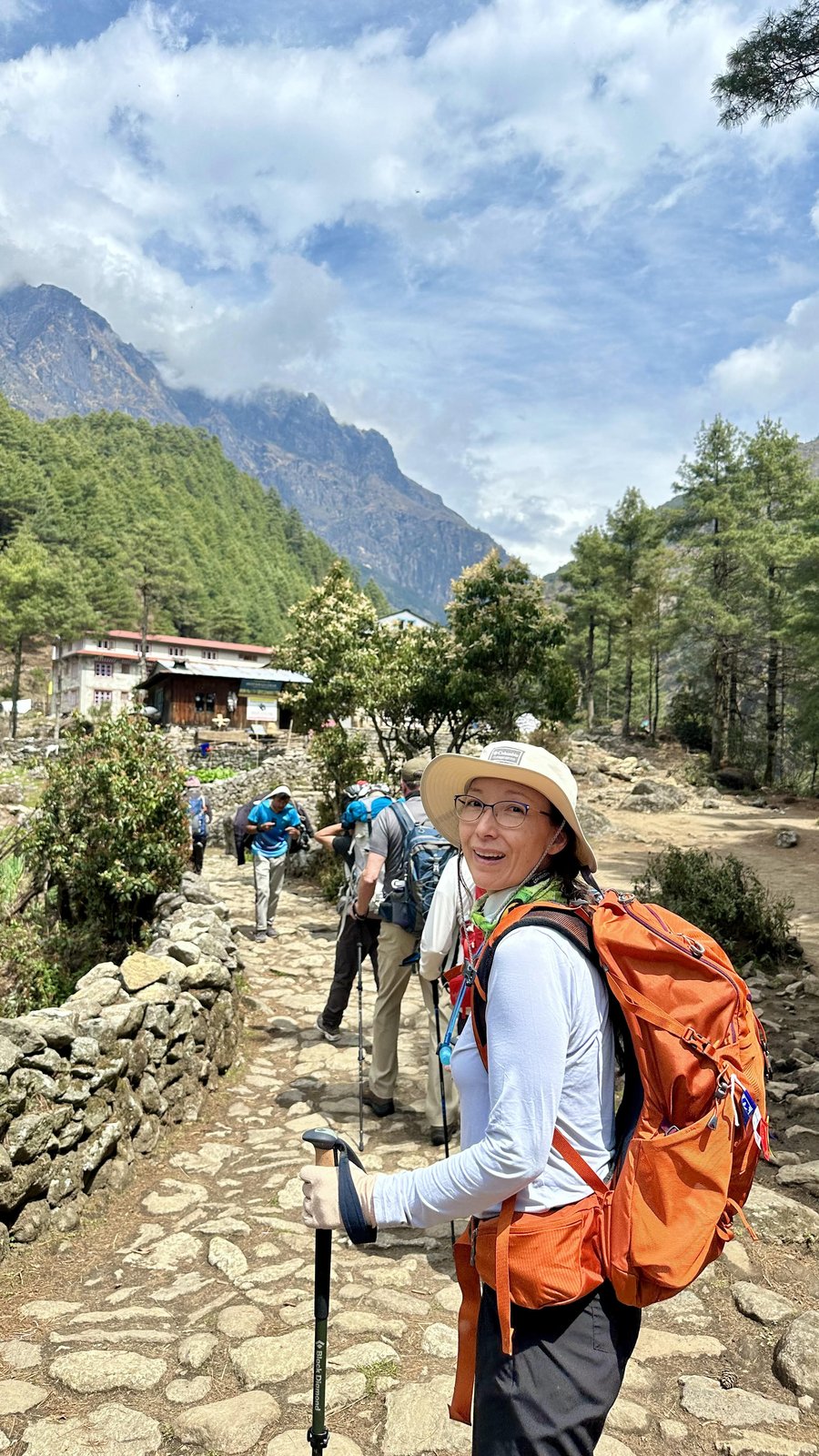
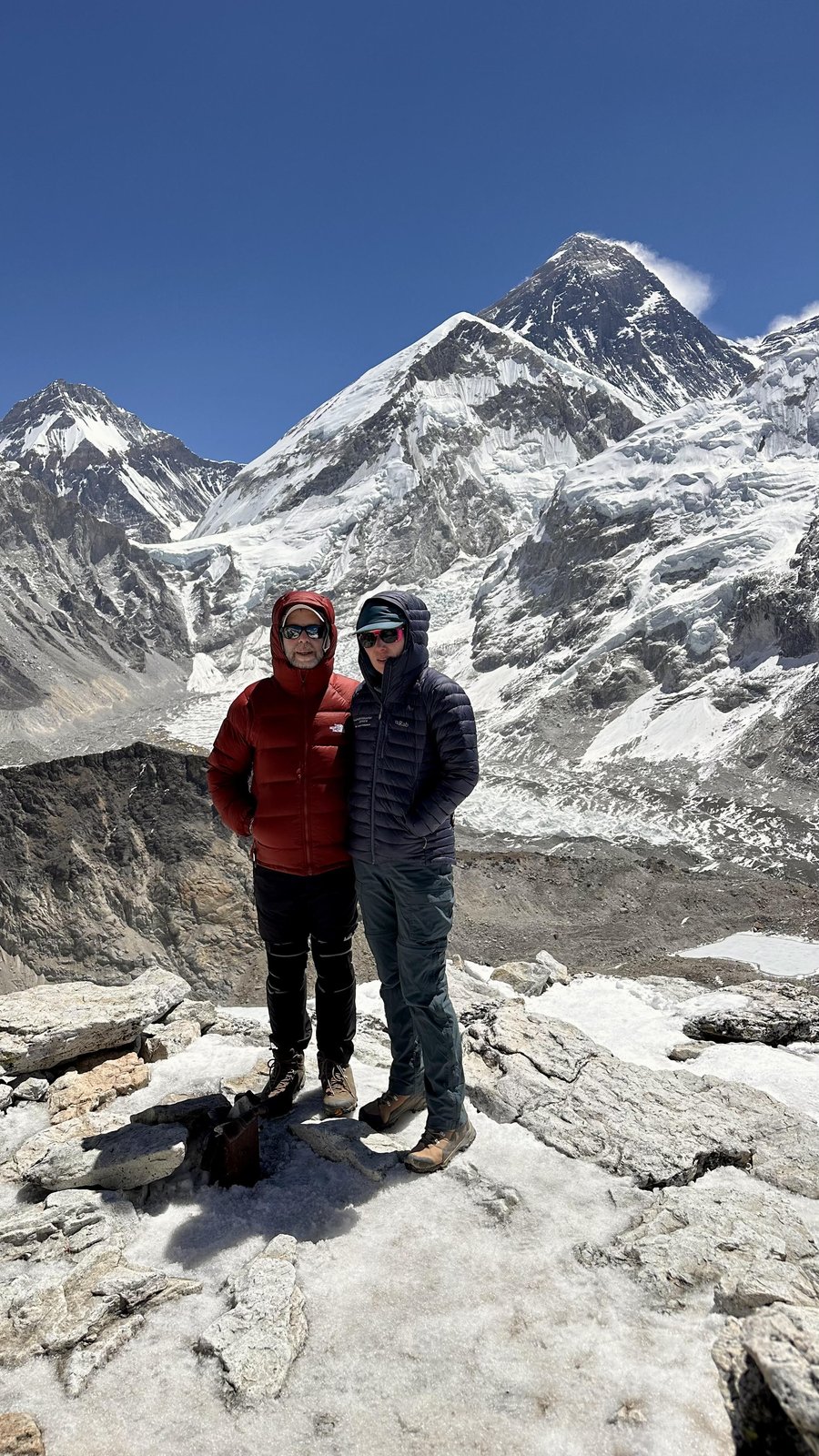
I made it to Everest Base Camp on April 15, and so did Dawn (which is the more surprising of the two facts, for reasons I will get to). That same morning we had climbed Kala Patthar to 18,570 feet for views so cinematic they looked rendered, like Walt Disney himself had been hired as the location scout. Then we walked back down to Gorak Shep and on to the famous rock at 17,598 feet, and it was, hands down, the single most exhausting day of our adult lives.
That part you already know if you read the prep post. The part you don’t know is how it actually happens, and specifically who makes it happen, because the answer is not “me.”
The cold is worse than the altitude
I told everyone I was worried about the altitude. I should have been worried about the cold.
We hiked through real weather: one day in the rain, one day in the snow, most days somewhere in between. The walking-cold was fine, because you can outwalk it. The sleeping-cold is the one that nearly broke me. The teahouses (lodges along the trail) heat the dining room until everyone goes to bed, and then they let the bedrooms drop to whatever the Himalayas feel like that particular night, which is reliably “low.”
Mummy sleeping bags assume you sleep on your back (which I don’t naturally do, but those bags rather do insist on it). They also wrap your face and chest tightly enough that, combined with thin air at 3+ miles above sea level, the body interprets the whole arrangement as “something heavy is sitting on you, you cannot breathe, wake up now.” This is not a relaxing way to be woken up, and I had it nightly for about ten days.
For context, the air at Everest Base Camp has roughly fifty percent of the oxygen you get at sea level, which feels approximately like breathing through a straw (the regular kind, not one of those wide milkshake straws).
The altitude is mostly a daytime problem and the cold is a nighttime problem, and the nighttime problem wins by default, because you cannot walk faster to escape your sleeping bag.
There is also a smaller, stupider hardship nobody warns you about: the trail does not go up in a straight line. You climb 800 feet, feel triumphant, and then descend 400 feet to cross a river, putting you 400 feet lower than you were thirty minutes ago. The math says you netted 400 feet, but the morale insists you climbed 1,200 feet for nothing.
Diamox is a wonder drug, mostly
Diamox, or acetazolamide, is the standard altitude medication. It tells your body to ventilate more aggressively, which keeps your blood oxygen up. I started taking it on day two. Five hikers in our group: four of us were on Diamox by the end. (Bob, the lone holdout, made it without. Bob is a recently retired partner at a major Philadelphia law firm, slightly older than I am, and the only person in our group who did every optional side hike on the trek. One day, he added a hike that was not even on the menu, because he had apparently not been punished enough yet that morning. Bob is a machine, and also a genuinely funny and nice guy. Bob, if you are reading this, please write a memoir.)
In a teahouse one morning, an older Indian couple at our table mentioned the husband was not feeling well. I gave them my eloquent verbal commercial for the drug: “Feeling altitude sour? Try Diamox power!” They went off to the village clinic to get some pills (though you don’t need a prescription for Diamox in Nepal because they like it when the tourists don’t die). Dawn and I walked into the main part of Dingboche to get massages, which is a thing you can apparently do at 14,500 feet, and is amazing and very odd.
When we got back, only the wife was at the lodge. We asked where her husband was. She told us he had been emergency-evacuated by helicopter. The clinic had checked his blood oxygen and it was in the 50s, percentage-wise. (For reference, “fine” is 90 and up. 50 is “you should be in a hospital, not a teahouse.”)
Altitude turns on you fast, and the whole trek is a slow conversation with how much oxygen you have left. Your only real moves are to go down or take the drug.
Some people you meet on the trail
The Khumbu Valley is busy in April. There is a tea-lodge in Dingboche where Dawn and I happened to share a dining room with Kristin Harila, the Norwegian climber who summited all fourteen of the world’s 8,000-meter peaks in 92 days, breaking the previous record (six months and six days, set by a man) by more than half.
She barely comes up to my shoulder, is kind and easy to talk to, and is absolutely amazing in the literal sense of the word. Her team stopped at the same teahouses we did, even though her actual hiking speed was at least double ours, so we kept running into her over the course of several days. I have a new climber crush. (Yes, I asked for a photo, yes, she said yes, and yes, I am now on a first-name basis with one of the greatest mountaineers alive, which is the kind of detail I plan to slip casually into conversation for the rest of my life. I have a frame on order.)
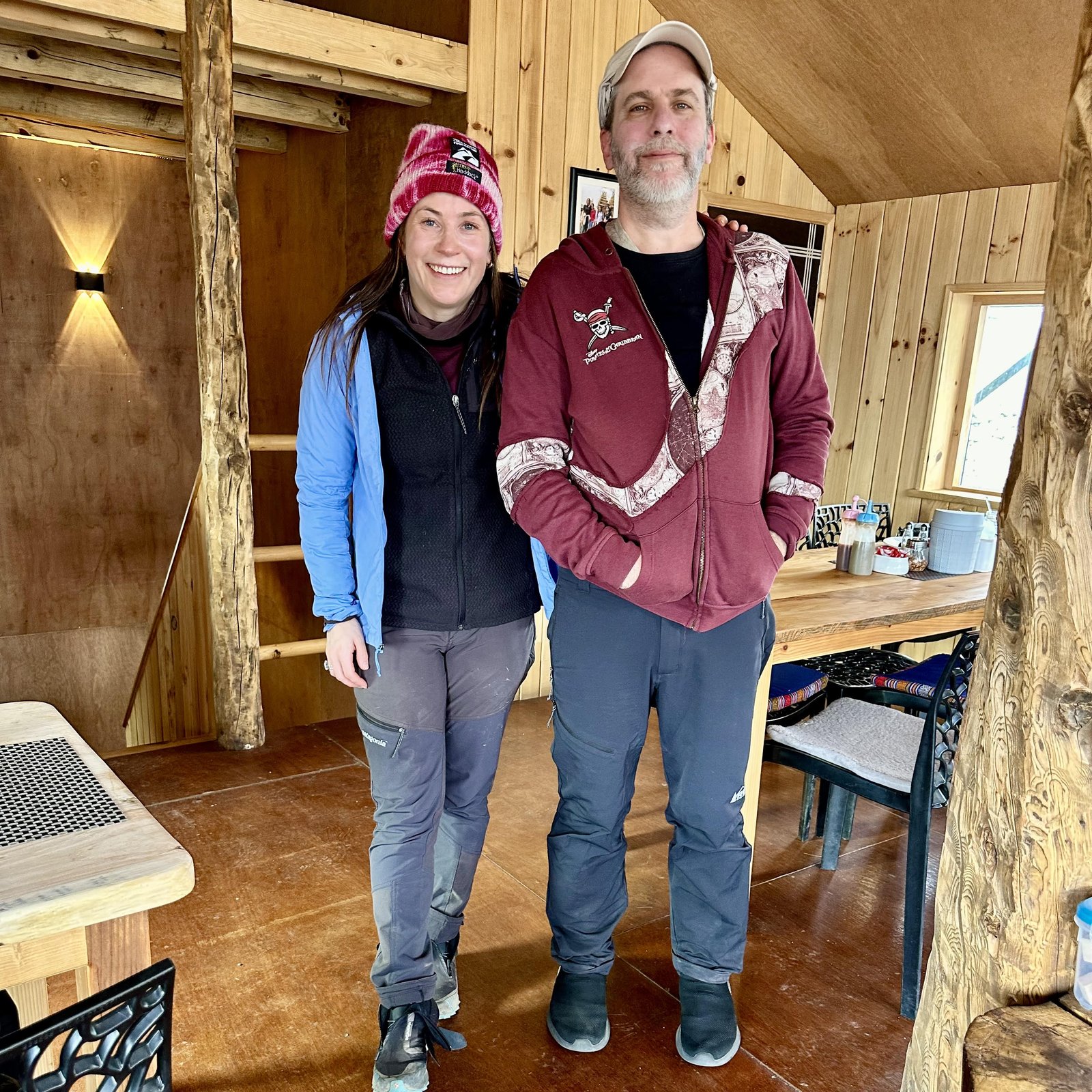
A different night, we shared a lodge with the actress Lily James, who is now apparently a serious trekker because she fell in love with the sport while filming the Cliffhanger reboot, which is a sentence I genuinely never expected to write.
The 400-foot problem
The hardest moment of the trek was not Base Camp. Base Camp is at 17,598 feet, and we got there. The hardest moment was on Kala Patthar, four hundred feet from the top, with Dawn sitting down on a rock.
Some context is in order. Dawn really did not want to do this trip. She is an artist who paints in oils and watercolors, and “high-altitude hiking in Nepal” was approximately tied with “extreme couponing” on her list of natural interests. She came because we wanted to build a memory together, and Dawn is a trooper.
Two weeks of acclimatization in Santa Fe and three months of stairwell work later, we were both in the best shape of our adult lives. (I used to run track, I lettered in wrestling, I am 51, and I have never been this fit. Make of that what you will.) Dawn outpaced me on several climbs and did not say a word about it.
But four hundred feet below the top of Kala Patthar, in thin air, she ran out. She sat down on a rock and told me to go on without her.
What I learned in that moment is that I could not, not because the rules said so, but because the entire reason I had been climbing was Dawn. I had been climbing for her, with her, alongside her, and the idea of finishing the last four hundred feet without her was suddenly a lonely concept I had no interest in pursuing.
Our guide, Mike Roberts (who has summited the actual Everest seven times and is older than both of us), sat down next to her and gave one of the quietest, most genuinely inspiring pep talks I have ever heard. He told her to rest, and we did, all three of us, for several minutes that felt much longer than they actually were.
Then we went up the last four hundred feet together. The views from the top of Kala Patthar are the views I will remember for the rest of my life. After that we walked back down to Gorak Shep and continued on to Everest Base Camp, and Dawn did all of it, including the parts she had told me on a rock she could not do.
The “photo rock” and the pile of rocks
Everest Base Camp is two different places.
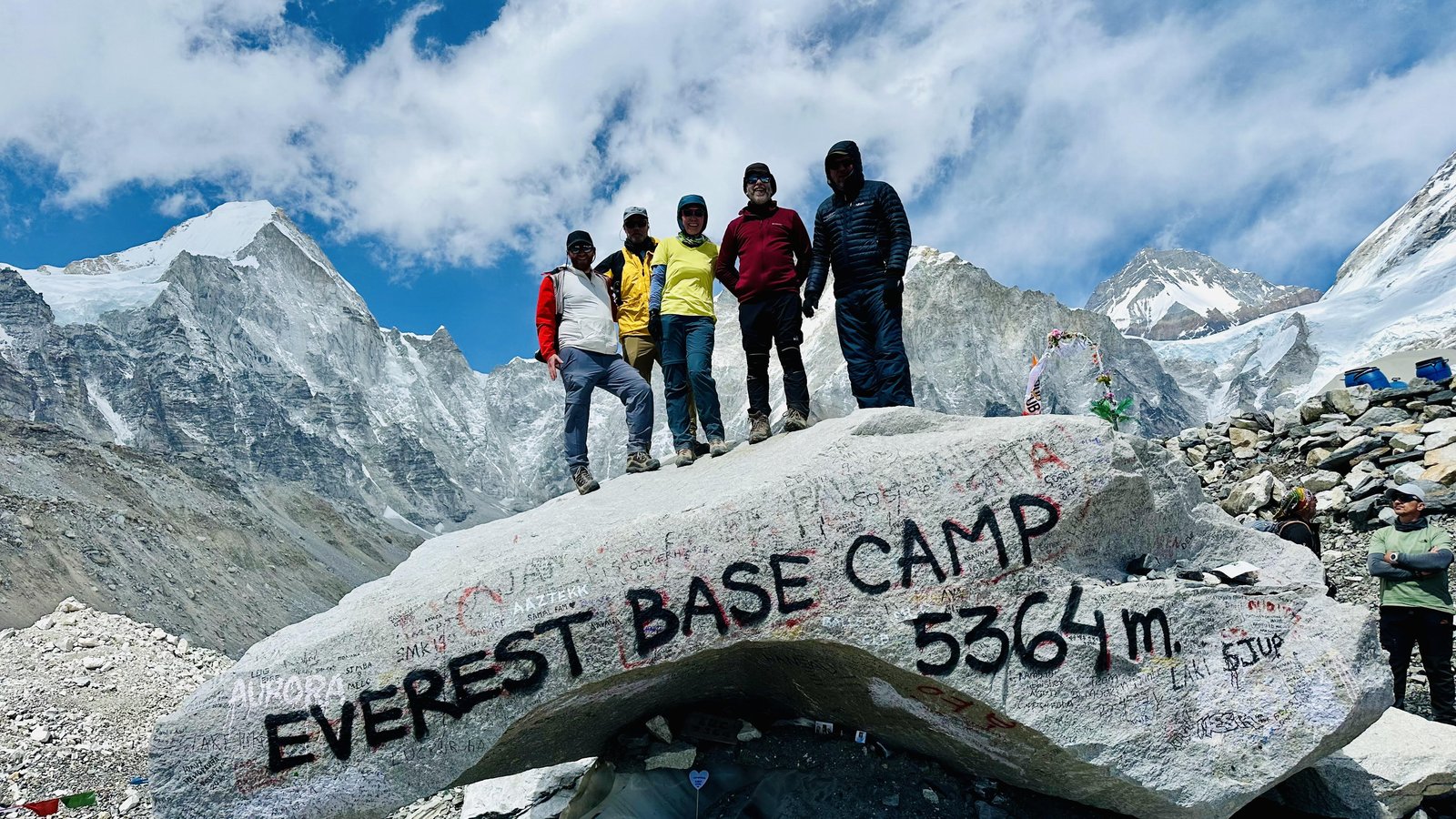
The first place is the famous “photo rock,” the one with the painted lettering and the prayer flags, the one in every photo you have ever seen of someone grinning at EBC. Arriving there is euphoric in a way that is hard to describe without sounding sentimental, and Dawn and I will remember the moment we touched the rock for the rest of our lives.
The second place is Everest Base Camp itself, which is a sprawl of dirty rocks, dirt, and tents about a mile long, sitting on top of an ice-cold glacier. (You do not see the glacier in any of the photos. It is, generously, the floor.) Our camp was on the far side, and by the time we got to our tents, the euphoria had worn off and the only ambitions left were hot tea, more clothing, and sleep.
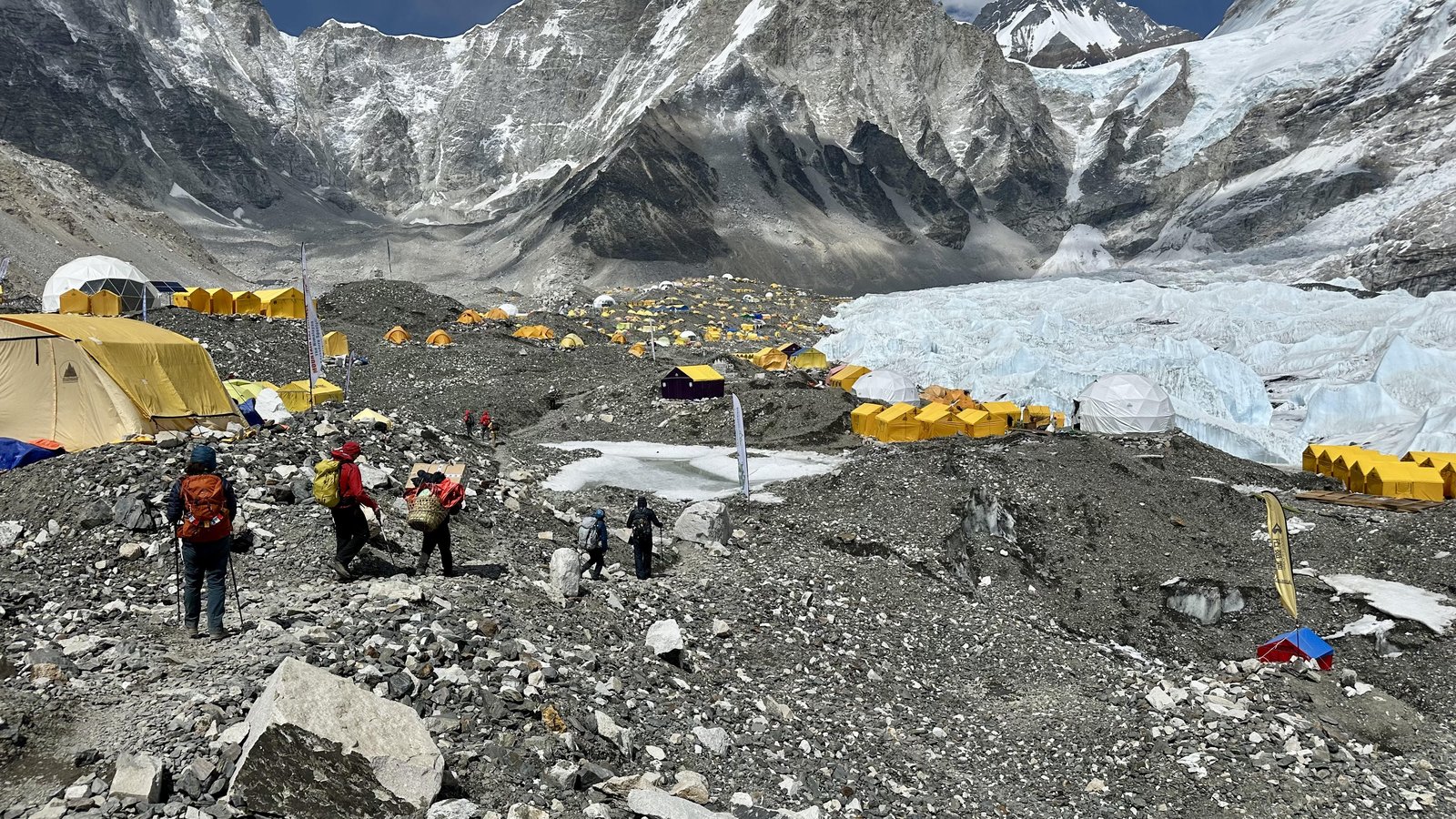
If you want a metaphor for the relationship between expectations and reality, “photo rock and then pile of rocks” is the cleanest one I have.
The other half of the math
The trek was hard but possible, and the reason it was possible was the people.
Dawn was the reason I kept walking, which I have already covered above.
The other reason was the porters. There were three of them carrying our overnight gear, two of them sixteen years old and the third one seventy. They carried everything on a strap around their foreheads, the traditional way, and they ran up trails I was crawling up. Edmund Hillary gets ninety percent of the historical credit and Tenzing Norgay gets ten, which is a ratio I have been suspicious of since I figured out what porters actually do. Whenever I considered giving up, I would remember that two teenagers and a senior citizen were carrying everything I needed for the night while I was struggling with a day pack. It is hard to be the slowest middle-aged man on a mountain when the people doing the real work are not even a little tired.
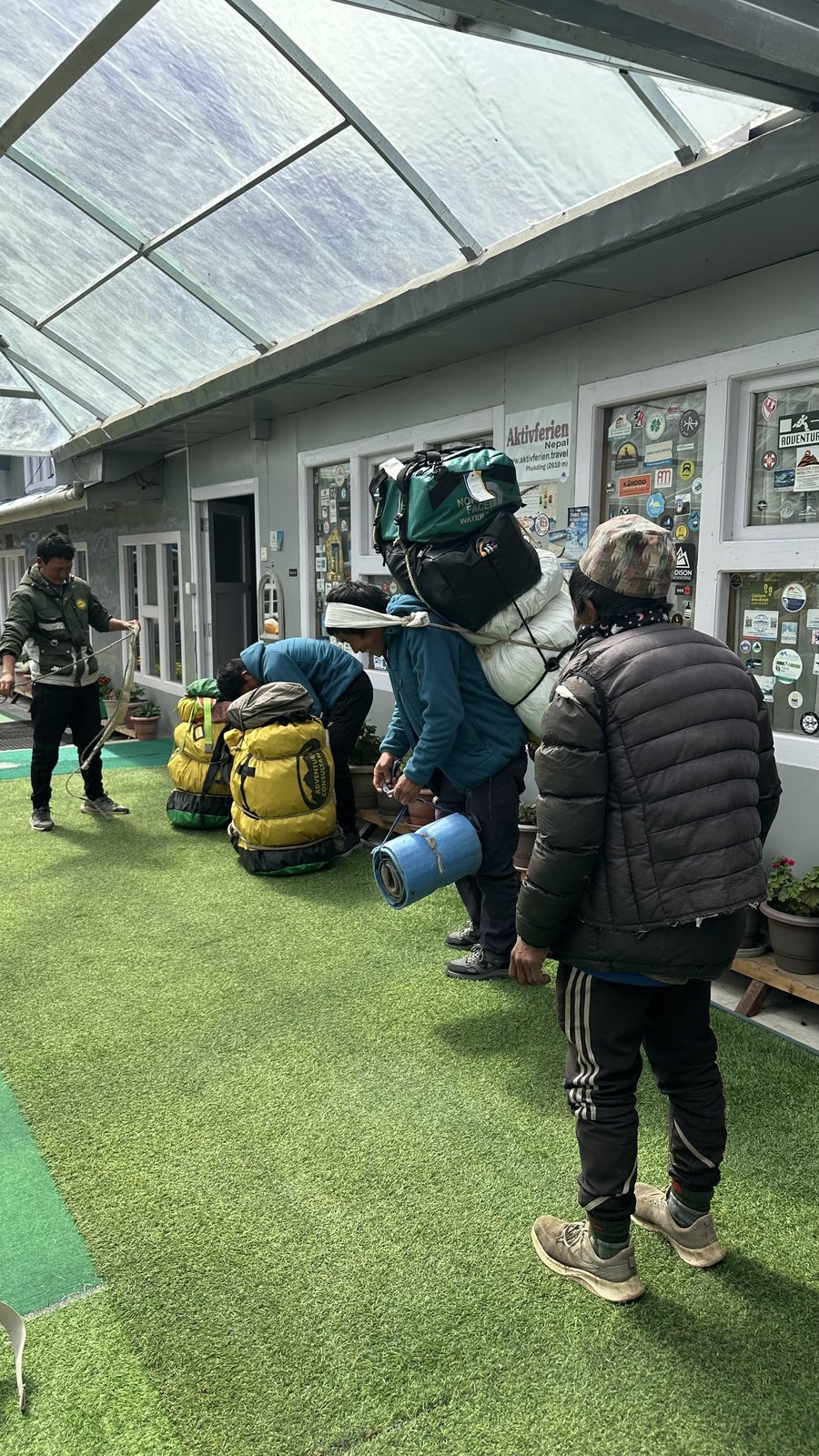
I tipped them well. (Dear goddess, they deserved it.)
What I actually learned
Nobody summits anything alone, even when they technically summit alone. The mountain is a public collaboration between you, your partner, your guide, your porters, the people in the next lodge, the chemist who invented Diamox, and the strangers at the dining table who happen to be doing something incredible.
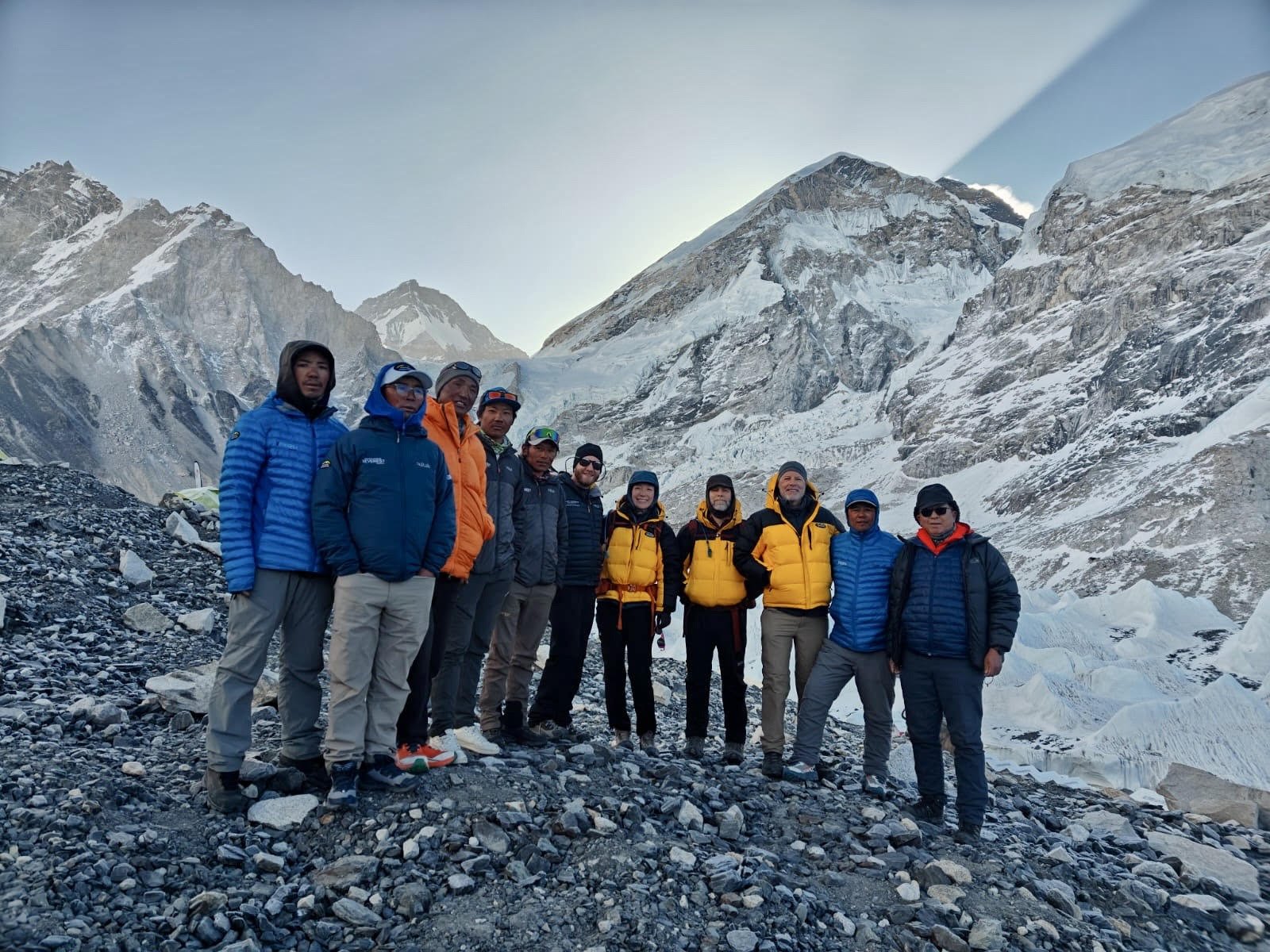
Edmund Hillary always credited Tenzing Norgay, and yet nobody publishes a list of credits when they post their grinning photo at the rock.
I think it works that way for most hard things, including the work I get paid for. I run AI companies in a wave of attention pointed mostly at the front of the room, and the companies run because a lot of people do a lot of work that nobody photographs.
My father used to say “no one can take your experiences.” (He was not specifically thinking of high-altitude Himalayan trekking when he said it, but the principle holds.) I will be carrying Kala Patthar and the photo rock and the four-hundred-foot rest and the porters and the teahouse helicopter and Kristin Harila for the rest of my life.
The next summit is undecided. Dawn and I discussed going to Mont Blanc but I think I was referring to the mountain and she was referring to some high-end ink pen store. So for right now, the next adventure is up in the air, but Dawn and I do agree that it will have heated rooms.