How Many Fire Extinguishers Does an AI Summit Need?

The answer is 6, and I know that because at 7:30 on Friday morning, on the day the first Caribbean AI Summit was due to open, we found out that every booth on the floor needed its own fire extinguisher, and the fire marshals were on their way to inspect. (Nobody had mentioned this to us before the morning of the conference, and I have no idea why, so if you’re a fire marshal and you know how that happens, write me at Edward@Roske.AI, because I genuinely want to know.)
So my wonderful wife Dawn got in the car, drove to Walmart at top (legal) speed, bought 6 fire extinguishers, and drove them back to the Puerto Rico Convention Center, and we got one into every booth just before the fire marshals walked in. (Edward, you spent 25 years selling planning software to CFOs and you didn’t plan for the fire code?!? In fairness nobody told you, but you’d think a guy who plans for a living would have thought to ask… and no, “nobody told me” has never once worked as an excuse in a budget meeting, so don’t try it here.)
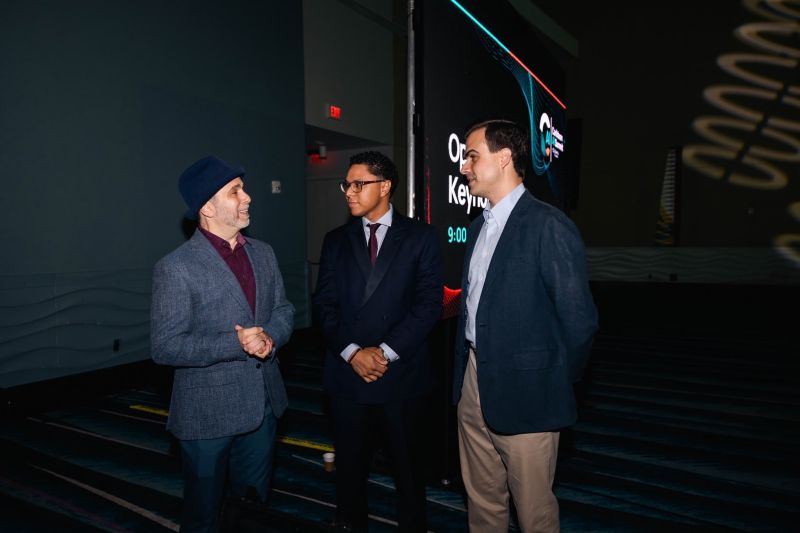
If you missed it (and I told just about everyone I know to come, so I know exactly who you are), here’s what you missed. More than 800 people came from 17 countries, 18 US states, and 5 continents, and they heard 44 speakers (that count includes the panelists, who worked every bit as hard as the keynoters and got a fraction of the stage time) across 3 tracks, Business, Technical, and Society, all running at once, with live captions in English and Spanish on every session.
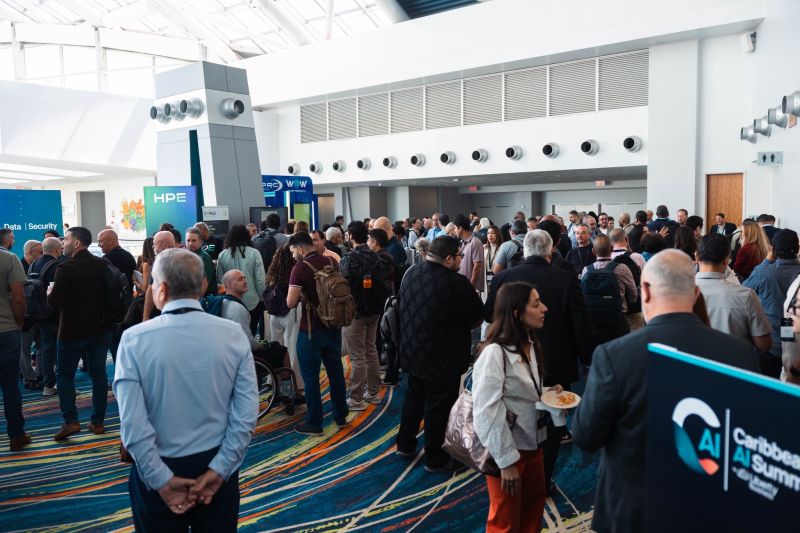
Back in February I wrote that this would be the largest AI conference Puerto Rico had ever seen, and the largest in the Caribbean (probably), and one day, if the Gods were willing and the creek don’t rise, maybe the largest in the world. I promised on this site that I’d grade those predictions once I’d slept, and I’ve now slept, so Puerto Rico and the Caribbean are both a yes (the Caribbean by a lot, and people were shocked), and the world I’ll have to get back to you on.
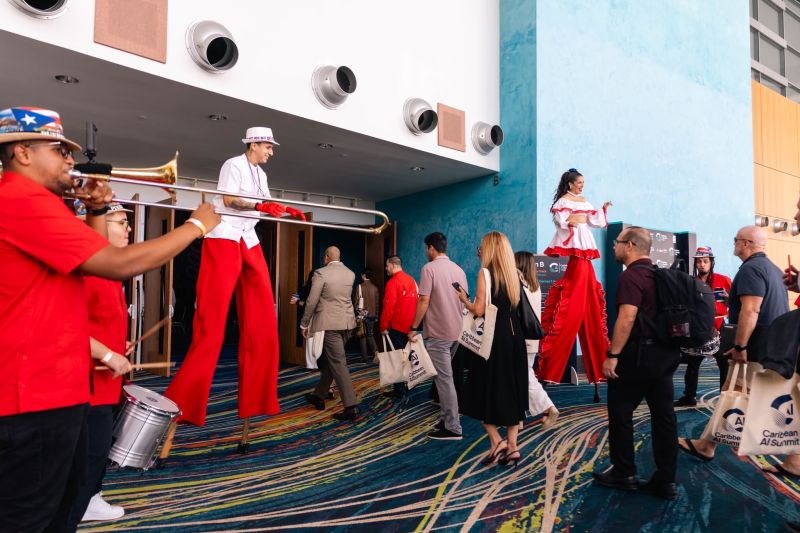
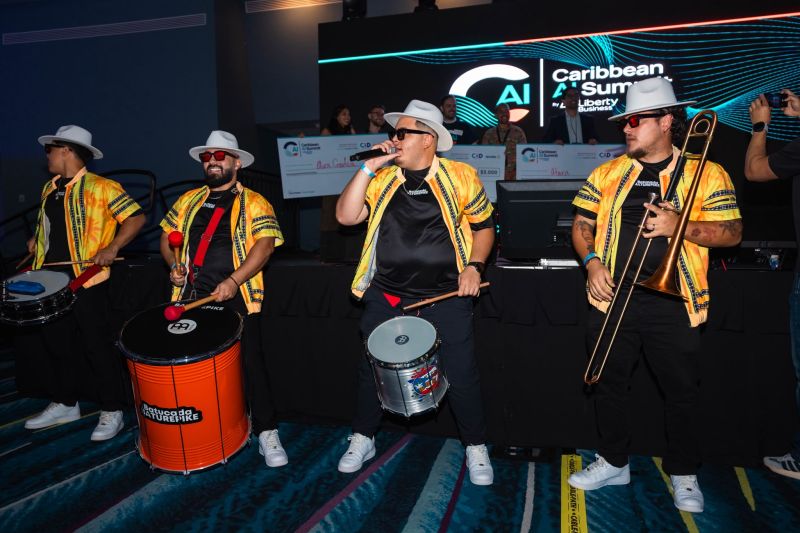
The opening act was a batucada (a drum band, for those of you who’ve never had one march past your desk at 9 in the morning), and it led everybody up the escalators to the keynote ballroom like a very loud, very happy parade. We closed the conference the same way, with a second batucada, and that one had the whole room dancing. Yes, I danced. (If you were there and you saw it, no you didn’t.) The happiness in that room was amazing.
My favorite moment that had nothing to do with AI came when the Speaker of the Puerto Rico House of Representatives walked into the ballroom and the press mobbed him from the door all the way to the stage, and he didn’t get clear of them until he literally stepped up onto the stage. For a minute I honestly thought they were going to kidnap him.
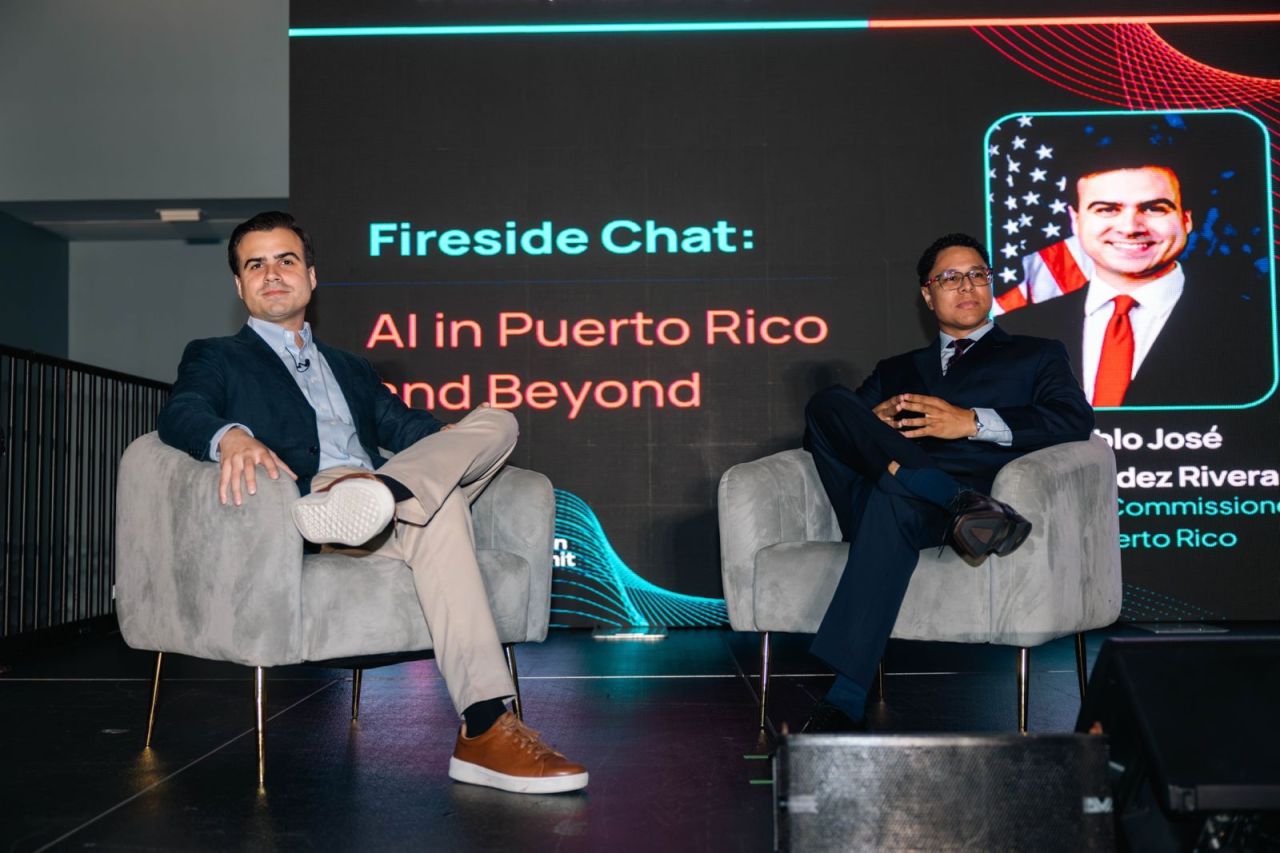
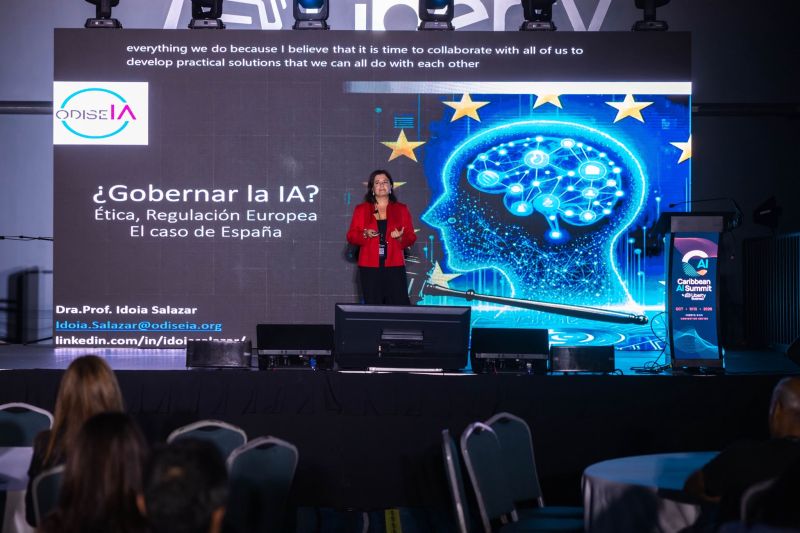
The content held up its end, too. Fabio Duarte from MIT’s Senseable City Lab gave the opening keynote, Gauthier Vasseur from UC Berkeley gave his keynote on building AI-capable organizations and then moderated the business AI panel (I’d told everyone to buy him an espresso afterward, and I hope somebody did), and the Resident Commissioner of Puerto Rico, Pablo José Hernández, sat down for a fireside chat on AI in Puerto Rico and beyond. On Saturday afternoon Idoia Salazar, who advises the European Parliament on AI, and Kay Firth-Butterfield, the World Economic Forum’s former Head of AI, closed it out back to back, with the hackathon awards right after. I emceed that whole closing session and gave the final words of thanks, which is a lot of microphone time for a guy whose title is Co-Chair. (JD Torres is our Chair.)
The hackathon deserves its own post, and it might get one. The theme was AI for Healthcare in Puerto Rico, teams had 48 hours, and 29 projects made it onto Devpost by the deadline, and a surprising number of them (at least 4) were built around a problem anyone who’s lived here for a while understands immediately: what happens to patients who need electricity to stay alive when the power goes out. First place and $5,000 went to Bryan Collazo for Atara, an AI agent that answers a clinic’s phone in a realistic Puerto Rican voice and works the clinic’s medical records system live, mid-call. Second place and $3,000 went to AJ Rivera for RosterPlanner, which builds nursing shifts that satisfy the legal, staffing, and union rules at the same time (I’ve built a lot of planning systems, and that’s a harder problem than it sounds). Third place and $2,000 went to James Dreben and Raquel Maldonado for Aura Curativa, which helps people actually collect the insurance reimbursements they’re owed, and Daniela Frias took Best of UWE Studio for Red de Cuidado PR, a care network for those electricity-dependent patients that gets ready before the power fails. Pedro Cruz ran the whole hackathon, with mentors from Holberton School and CUD, and I wasn’t eligible (I already have a team of AI agents rebuilding this website every Saturday at 5AM, which felt like an unfair head start).
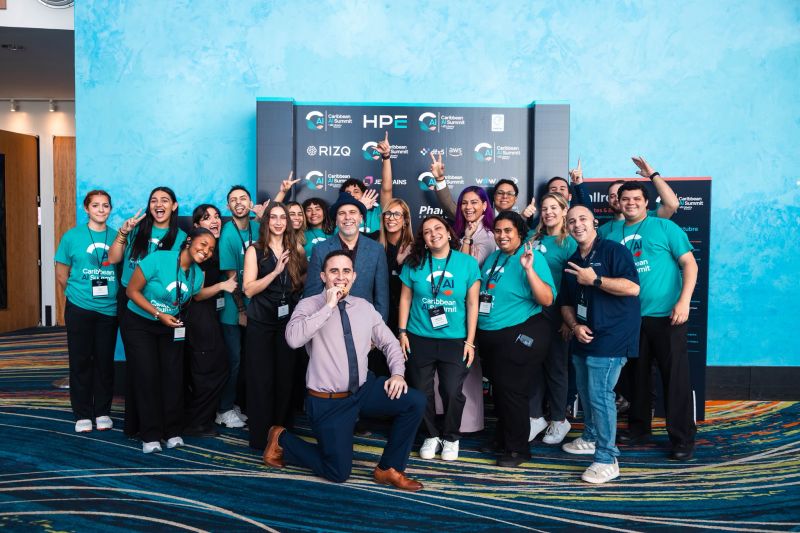
When I got the last word on Saturday, I spent it on thank-yous. So thank you to the volunteers in the teal shirts, who were everywhere at once all weekend, to the board, to JD, to Up Shine Agency for the logistics, to every sponsor who signed before there was a single photo to look at, to all 44 speakers, and to everybody in the Puerto Rico AI Community, which started as free meetups every other month and has now had more than 1,000 different people through the door. And thank you to Dawn, obviously, for the fire extinguishers and pretty much everything else.
Will there be a 2nd annual Caribbean AI Summit (to make it actually, you know, annual)? You’ll just have to stay tuned to find out.
If you were one of the 800-plus, thank you for coming! And if we didn’t manage to find each other between sessions, write me (Edward@Roske.AI) and tell me which session you’d sit through again.
Asking good questions, Edward